

Chapter 11 highlights
Space & Sustainability

Supporting the University’s Missions & the Environment
Campus space must support the academic and research missions of the university. This means adding space as it’s needed as well as applying comprehensive policies on allocation and use of existing space, while doing the capital planning necessary to meet the institution’s needs. The U-M has added a focus on sustainability, which relates to space management and other business practices. As such, the university has set goals for greenhouse gas emissions, carbon output of university vehicles, and production of waste, among others.
Campus plan 2050
Campus Plan 2050 will guide the next 25 years of change to the Ann Arbor campus. The initiative proposes innovative infrastructure solutions and efficiency upgrades to the transit system.
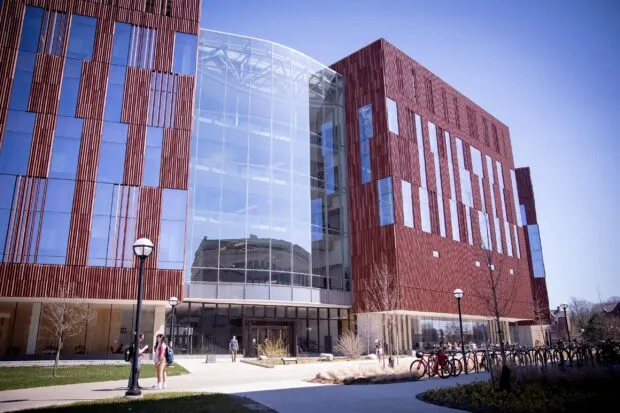
Campus space
Strategic use of space
Ann Arbor campus space has increased at an annual growth rate of about 1.0 percent over the last decade to support the changing needs of a growing campus community.
Learn more about campus spaceSustainability
33%
reduction in overall greenhouse gas emissions over the last decade, with emissions from purchased energy generation decreasing by 55%
Space by function
26% of campus space is used for Teaching & Research. All types of space are needed to support the university’s mission.
,Teaching & Research,Library,Administration,"Parking, Athletics, Other",Plant & Operations,Student Housing,Unclassified
2015,4.9,0.8,2.3,6.0,0.8,3.5,1.3
2016,5.0,0.8,2.4,6.3,0.8,3.7,0.9
2017,5.1,0.8,2.4,6.2,0.8,3.7,0.7
2018,5.1,0.8,2.3,6.4,0.7,3.7,0.9
2019,5.2,0.9,2.3,6.4,0.7,3.6,0.9
2020,5.1,0.9,2.4,6.3,0.7,3.7,1.4
2021,5.2,0.9,2.3,6.7,0.7,3.7,1.1
2022,5.3,0.9,2.3,6.8,0.7,3.6,1.0
2023,5.4,0.8,2.4,6.7,0.7,3.6,0.7
2024,5.4,0.8,2.4,7.0,0.7,3.6,0.7